

A celebratory first post
Accessibility so often becomes focused on “what is wrong” and “how many issues there are”, it’s easy to overlook the good, the progress, advancement and highlight the wins.
In my first post, I want to highlight something good!
Compliance = the typical motivator
After years working in the public sector, most federal, state and local agencies are motivated to “do accessibility” because it’s the law and they’re required to. That’s the driving factor that is pushing, maybe dragging is more accurate, teams to get their content accessible.
And I’m thankful for Section 508 and the Americans with Disabilities Act (ADA). Public services need to be accessible to all members of the public—it’s the bare minimum.
But compliance isn’t a motivator for all organizations, because not all organizations and industries are called out in these regulations.
What then becomes the motivator for digital accessibility?
Caring about access = the strongest motivator
Honestly, the strongest motivation for accessibility has never been compliance.
It’s caring. Caring about access.
Caring whether people can participate independently, comfortably and fully and whether someone can engage with what you’ve created without unnecessary barriers in the way.
And recently, I came across a really thoughtful example of this while scrolling Instagram.
I saw a post from about Crossway’s new ESV Holy Bible for Kids: Dyslexia-Friendly Edition.
Inclusive design done right
What stood out to me wasn’t just the product itself, but the intentionality behind it.
The typeface, typesetting, spacing, and formatting weren’t chosen by guesswork. They were researched, designed, and tested with dyslexic readers in mind, so children can engage with Scripture more comfortably and confidently.
What also caught my attention were the colored reading overlays included with the Bible. These physical filters help some readers reduce visual stress and improve reading comfort, and the fact that several colors are offered matters. What works for one reader won’t work for another, and that’s exactly the point. Accessibility is rarely about finding a single solution. It’s about removing as many barriers as possible and giving people options.
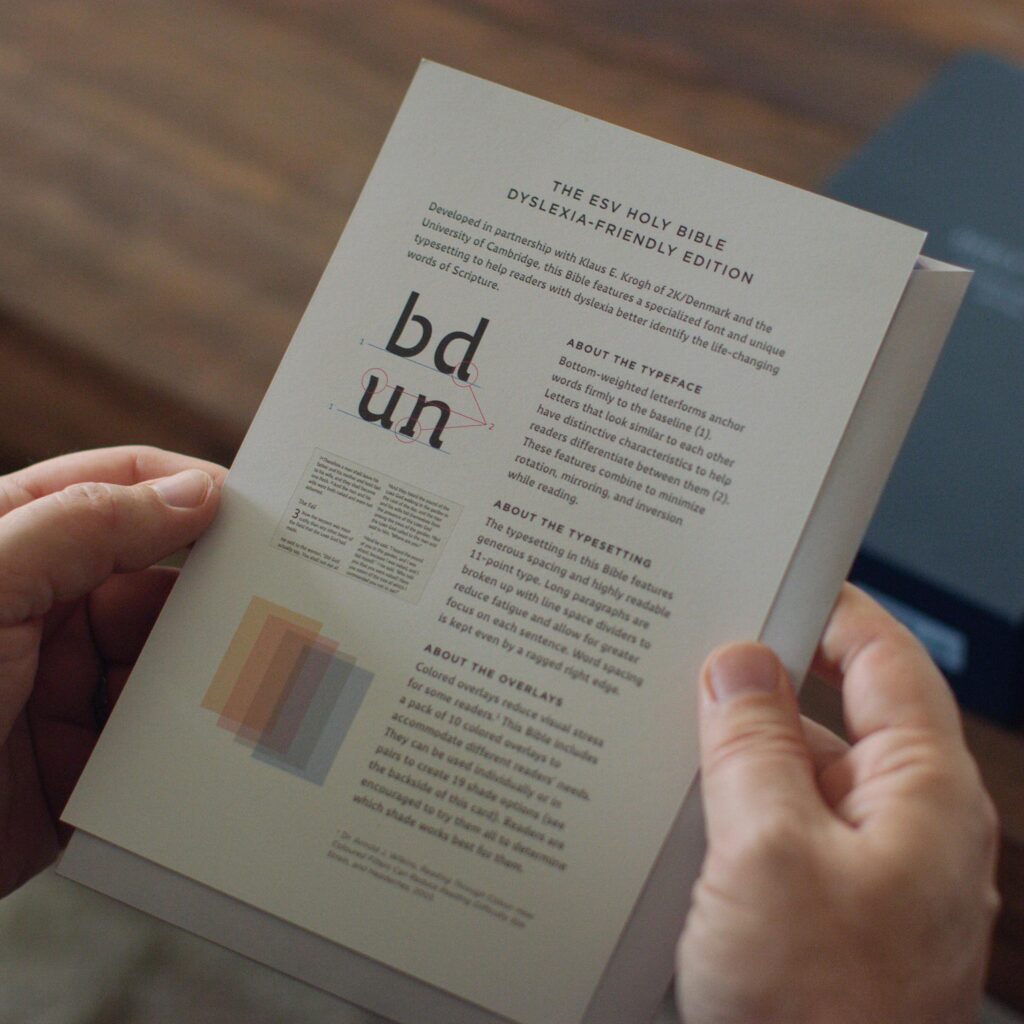
Image courtesy of Crossway.
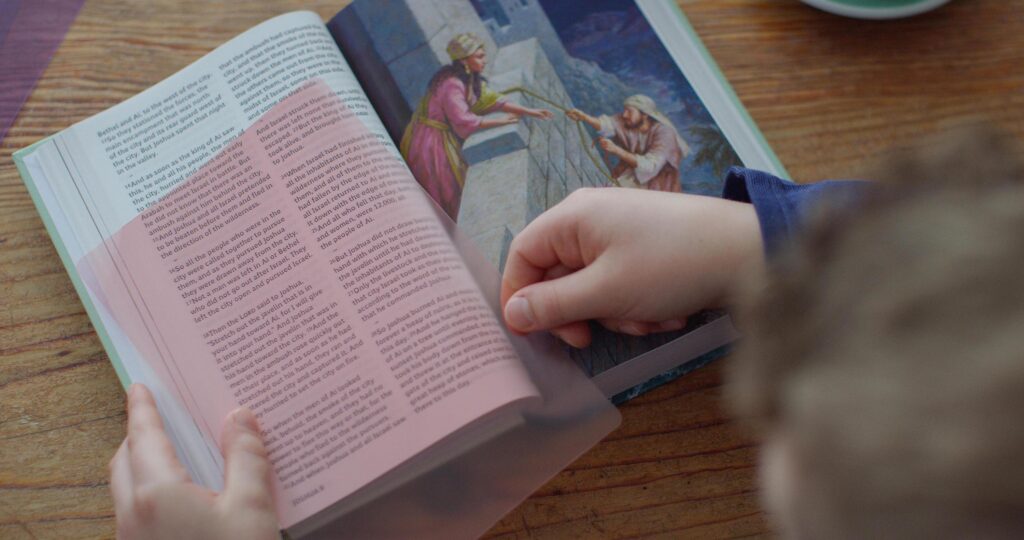
Image courtesy of Crossway.
What a great example of inclusive design done right. Not because of compliance, not because they HAD to, but because someone cared about access.
And that personally resonates with me. Ever since I was introduced to digital accessibility, I’ve thought about the digital content that has helped me grow, specifically in my faith. The spiritual wisdom, encouragement, and “daily bread” found in Scripture and other content should be available to everyone who wants it and is searching for it.
Accessibility is intentional
Accessibility shows up in: printed materials, events, signage, typography, reading level, information architecture, product design, and the list goes on.
Sometimes accessibility is not about adding in more. Most of the time a great user experience is quiet. A user gets the task done or finds the information they’re looking for as easily as possible, and nobody notices a thing.
And there are the special moments, where accessibility is louder and it says “this was designed with you in mind.” That’s why this dyslexia-friendly Bible stood out to me so much. The design choices and the research Crossway did, it communicates thoughtfulness.
A different way to think about accessibility
Lately, accessibility conversations (at least in my algorithm) are centered around meeting compliance deadlines, remediation, checklists, and technical violations.
Don’t get me wrong, those things matter, but if compliance becomes the only framework, accessibility feels like yet, another task.
What I appreciate about examples like this is that they remind us accessibility can also come from empathy, hospitality, and intentionality.
From asking questions like:
- Who might struggle with this?
- What barriers can we reduce?
- How do we help more people participate?
- How do we make this easier to engage with?
Those questions apply just as much to churches, nonprofits, schools, and small businesses as they do to government agencies. Regardless of industry, every organization communicates something and we want it to reach people.
Celebrating the wins
There will always be barriers to improve, issues to fix, and knowledge to share. But I also want to celebrate organizations that are making thoughtful efforts to expand access well.
A reminder that inclusive design doesn’t need to be flashy or a complete rebuild. Sometimes it looks like better spacing, intentional font choices, and leads to a child feeling more confident reading independently.
That’s worth celebrating.
Leave a Reply